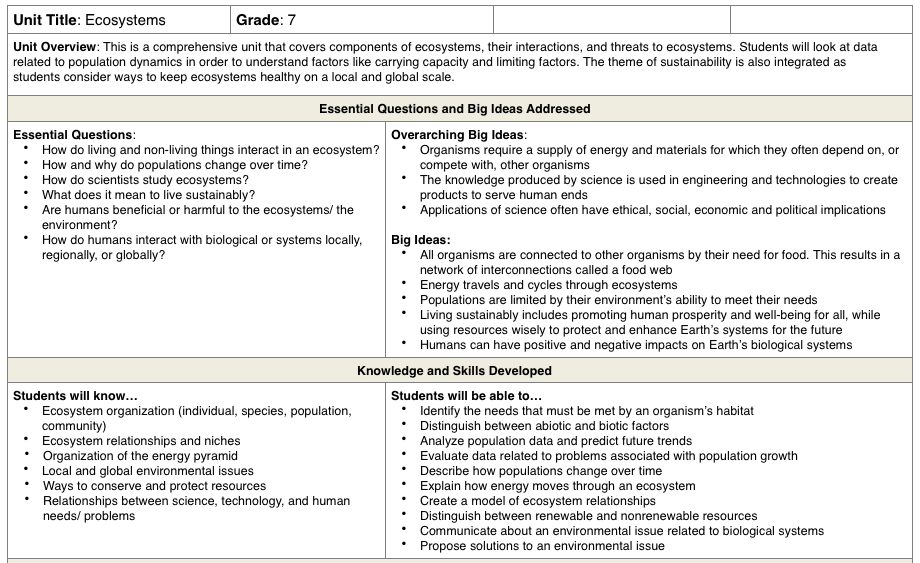
7th Grade 02/24/2020

UNIT OVERVIEW

LEARNING OBJECTIVES

Students will…

  • know how to create a revision sheet based on the Cornell note form or TRF
  • be able to search reliable information about a subject 
  • question the sources they may find
  • partner with their classmates to share what they learned

VOCABULARY

Cf. the unit overview

ASSIGNMENT

Part 1 : Vocabulary

In your notebook, list the unknown vocabulary that you find in the unit overview. Search for the definition and make sure you understand the meaning.

Search for reliable videos about these notions and watch a couple of them. Write the references in your notebook.

Part 2 : Revision sheet

Using the TRF or Cornell note form, ask questions to better understand the unit and big ideas. Search for information in your handbook and write down in your notebook where exactly you can find the lesson (what chapter? what page?…).

Part 3 : Sharing

Partner with a classmate to share what you just learn to make sure you understand the essential questions of the unit and the main vocabulary. Refine your notes based on your conversation. Search on explore learning some simulations that could be interesting to master the notions.

8th Grade 02/24/2020

UNIT OVERVIEW

LEARNING OBJECTIVES

Students will…

  • know how to create a revision sheet based on the Cornell note form or TRF
  • be able to search reliable information about a subject
  • question the sources they may find
  • partner with their classmates to share what they learned

VOCABULARY

Cf. the unit overview

ASSIGNMENT

Part 1 : Vocabulary

In your notebook, list the unknown vocabulary that you find in the unit overview. Search for the definition and make sure you understand the meaning.

Search for reliable videos about these notions and watch a couple of them. Write the references in your notebook.

Part 2 : Revision sheet

Using the TRF or Cornell note form, ask questions to better understand the unit and big ideas. Search for information in your handbook and write down in your notebook where exactly you can find the lesson (what chapter? what page?…).

Part 3 : Sharing

Partner with a classmate to share what you just learn to make sure you understand the essential questions of the unit and the main vocabulary. Refine your notes based on your conversation. Search on explore learning some simulations that could be interesting to master the notions.

8th Grade 02/18/2020

UNIT OVERVIEW


LEARNING OBJECTIVES

Students will…

  • Learn the names and functions of cell organelles.
  • Identify organelles on a diagram of an animal or a plant cell.
  • Explain how plant cells are different from animal cells.

VOCABULARY

cell membrane, cell wall, centriole, chloroplast, cytoplasm, endoplasmic reticulum, Golgi apparatus, lysosome, mitochondria, nuclear membrane, nucleolus, nucleus, organelle, plastid, ribosome, vacuole, vesicle

ASSIGNMENT

Part 1 : Gizmo warm-up

Go to explore learning.

Search for the definition of the highlighted word and write it down in your notebook. Then, complete the warm-up below.

Part 2 : Activity A Animal cells

Search for the definition of organelle and write it down in your notebook.

Draw the diagram below in your notebook. Then, label the organelles.

7th Grade 02/18/2020

UNIT OVERVIEW

LEARNING OBJECTIVES

Students will…

  • Learn how igneous, metamorphic, and sedimentary rocks form.
  • Compare the characteristics of different rocks.
  • Classify rocks based on their texture and other characteristics.
  • Categorize igneous rocks as intrusive or extrusive.
  • Identify where each type of rock formed.

VOCABULARY

classify, extrusive igneous rock, foliation, fossil, igneous rock, intrusive igneous rock, metamorphic rock, mineral, sedimentary rock, strata, texture

ASSIGNMENT

Part 1 : Review your vocabulary. Write the vocabulary above if you haven’t done it before.

Part 2 : Gizmo Warm-up

Go to explore learning. Complete the warm-up below if it’s not done yet. Write your answers in your notebook.

Part 3 : Activity A : Classifying rocks.

Complete the activity A below if it’s not done yet. Write your answers in your notebook.

Part 4 : Activity B : Rock location

Complete the activity B below. Write your answers in your notebook.

8th Grade 02/11/2020

UNIT OVERVIEW


LEARNING OBJECTIVES

Students will…

  • Explore inheritance of two traits.
  • Use Punnett squares to model the inheritance of two traits and predict probabilities of each offspring’s allele combination.
  • Use two Punnett squares to model each trait independently, then multiply the probabilities to find the probability of a given allele combination.
  • Use a single 4×4 Punnett square to model the inheritance of two traits.
  • Define gene, trait, and allele.
  • Discover how genes are passed down from parents to offspring.
  • Distinguish between dominant and recessive traits.
  • Use a Punnett square to predict the results of a genetic cross.
  • Describe a codominant inheritance pattern.
  • Predict the results of genetic crosses involving codominant traits.
  • Use a Punnett square to calculate the probability of offspring genotypes.
  • Explain the importance of performing multiple trials during an experiment.

VOCABULARY

allele, genotype, phenotype, probability, Punnett square

allele, codominance, dominant, genotype, heterozygous, homozygous, phenotype, probability, Punnett square, recessive, trial

allele, DNA, dominant allele, gene, genotype, heredity, heterozygous, homozygous, hybrid, inheritance, phenotype, Punnett square, recessive allele, trait

ASSIGNMENT

Part 1 : Review your vocabulary and make sure it’s written in your notebook. If there are new words in the list, please search and write the definition.

Part 2 : Make a revision sheet using the format of a TRF or Cornell notes.

  • List the essential questions you may have about the unit (cf. the unit overview above)
  • Write your answers
  • Take some note to make sure you understand all the notions
  • Visit your Gizmo account and write examples you have observed in the simulations (cell division, chicken traits, mouse traits I & II) to illustrate your notes.

7th Grade 02/10/2020

UNIT OVERVIEW

LEARNING OBJECTIVES

Students will…

  • Learn how igneous, metamorphic, and sedimentary rocks form.
  • Compare the characteristics of different rocks.
  • Classify rocks based on their texture and other characteristics.
  • Categorize igneous rocks as intrusive or extrusive.
  • Identify where each type of rock formed.

VOCABULARY

classify, extrusive igneous rock, foliation, fossil, igneous rock, intrusive igneous rock, metamorphic rock, mineral, sedimentary rock, strata, texture

ASSIGNMENT

Part 1 : Review your vocabulary. Write the vocabulary above if you haven’t done it before.

Part 2 : Gizmo Warm-up

Go to explore learning. Complete the warm-up below. Write your answers in your notebook.

Part 3 : Activity A : Classifying rocks.

Complete the activity A below.

8th Grade 02/06/2020

UNIT OVERVIEW


LEARNING OBJECTIVES

Students will…

  • Explore inheritance of two traits.
  • Use Punnett squares to model the inheritance of two traits and predict probabilities of each offspring’s allele combination.
  • Use two Punnett squares to model each trait independently, then multiply the probabilities to find the probability of a given allele combination.
  • Use a single 4×4 Punnett square to model the inheritance of two traits.
  • Define gene, trait, and allele.
  • Discover how genes are passed down from parents to offspring.
  • Distinguish between dominant and recessive traits.
  • Use a Punnett square to predict the results of a genetic cross.
  • Describe a codominant inheritance pattern.
  • Predict the results of genetic crosses involving codominant traits.
  • Use a Punnett square to calculate the probability of offspring genotypes.
  • Explain the importance of performing multiple trials during an experiment.

VOCABULARY

allele, genotype, phenotype, probability, Punnett square

allele, codominance, dominant, genotype, heterozygous, homozygous, phenotype, probability, Punnett square, recessive, trial

allele, DNA, dominant allele, gene, genotype, heredity, heterozygous, homozygous, hybrid, inheritance, phenotype, Punnett square, recessive allele, trait

ASSIGNMENT

Part 1 : Review your vocabulary and make sure it’s written in your notebook. If there are new words in the list, please search and write the definition.

Part 2 : Make a revision sheet using the format of a TRF or Cornell notes.

  • List the essential questions you may have about the unit (cf. the unit overview above)
  • Write your answers
  • Take some note to make sure you understand all the notions
  • Visit your Gizmo account and write examples you have observed in the simulations (cell division, chicken traits, mouse traits I & II) to illustrate your notes.

Part 3 : Join a group of 3, at the most.

Read the grid below so that you try to get highest score possible. What can you do today? Whats skills do you need to work on? How can you separate the work so that you get the best score possible?

Prepare a presentation about one of the subject listed below :

  • the cell cycle
  • Mendel’s pea plant experiment
  • Punnett square organization
  • Genotype and phenotype
  • DNA, gene, alleles, traits

7th Grade 02/06/2020

UNIT OVERVIEW

LEARNING OBJECTIVES

Students will…

  • Trace the path of a piece of rock through the rock cycle.
  • Describe how igneous, metamorphic, and sedimentary rocks are formed.
  • Explore the possible transformations from one type of rock into another.

VOCABULARY

deposition, erosion, extrusive igneous rock, intrusive igneous rock, lava, lithification, magma, metamorphic rock, rock cycle, sediment, sedimentary rock, soil, weathering

ASSIGNMENT

Part 1 : Review your vocabulary. Write the vocabulary above if you haven’t done it before.

Part 2 : Go here and here and watch the videos about the rock cycle.

Part 3 : Join a group of 4, at the most.

Read the grid below so that you try to get highest score possible. What can you do today? Whats skills do you need to work on? How can you separate the work so that you get the best score possible?

Prepare a presentation about one of the subject listed below :

  • the rock cycle
  • Common Arizona minerals
  • the three main rock groups
  • Mohs hardness scale
  • Characteristics of rocks and minerals

7th Grade 02/05/2020

UNIT OVERVIEW

LEARNING OBJECTIVES

Students will…

  • Trace the path of a piece of rock through the rock cycle.
  • Describe how igneous, metamorphic, and sedimentary rocks are formed.
  • Explore the possible transformations from one type of rock into another.

VOCABULARY

deposition, erosion, extrusive igneous rock, intrusive igneous rock, lava, lithification, magma, metamorphic rock, rock cycle, sediment, sedimentary rock, soil, weathering

ASSIGNMENT

Part 1 : Review your vocabulary. Write the vocabulary above if you haven’t done it before.

Part 2 : Go here and here and watch the videos about the rock cycle.

Part 3 : Join a group of 4, at the most.

Read the grid below so that you try to get highest score possible. What can you do today? Whats skills do you need to work on? How can you separate the work so that you get the best score possible?

Prepare a presentation about one of the subject listed below :

  • the rock cycle
  • Common Arizona minerals
  • the three main rock groups
  • Mohs hardness scale
  • Characteristics of rocks and minerals

8th Grade 02/05/2020

UNIT OVERVIEW


LEARNING OBJECTIVES

Students will…

  • Explore inheritance of two traits.
  • Use Punnett squares to model the inheritance of two traits and predict probabilities of each offspring’s allele combination.
  • Use two Punnett squares to model each trait independently, then multiply the probabilities to find the probability of a given allele combination.
  • Use a single 4×4 Punnett square to model the inheritance of two traits.
  • Define gene, trait, and allele.
  • Discover how genes are passed down from parents to offspring.
  • Distinguish between dominant and recessive traits.
  • Use a Punnett square to predict the results of a genetic cross.
  • Describe a codominant inheritance pattern.
  • Predict the results of genetic crosses involving codominant traits.
  • Use a Punnett square to calculate the probability of offspring genotypes.
  • Explain the importance of performing multiple trials during an experiment.

VOCABULARY

allele, genotype, phenotype, probability, Punnett square

allele, codominance, dominant, genotype, heterozygous, homozygous, phenotype, probability, Punnett square, recessive, trial

allele, DNA, dominant allele, gene, genotype, heredity, heterozygous, homozygous, hybrid, inheritance, phenotype, Punnett square, recessive allele, trait

ASSIGNMENT

Part 1 : Review your vocabulary and make sure it’s written in your notebook. If there are new words in the list, please search and write the definition.

Part 2 : Make a revision sheet using the format of a TRF or Cornell notes.

  • List the essential questions you may have about the unit (cf. the unit overview above)
  • Write your answers
  • Take some note to make sure you understand all the notions
  • Visit your Gizmo account and write examples you have observed in the simulations (cell division, chicken traits, mouse traits I & II) to illustrate your notes.

Part 3 : Join a group of 3, at the most.

Read the grid below so that you try to get highest score possible. What can you do today? Whats skills do you need to work on? How can you separate the work so that you get the best score possible?

Prepare a presentation about one of the subject listed below :

  • the cell cycle
  • Mendel’s pea plant experiment
  • Punnett square organization
  • Genotype and phenotype
  • DNA, gene, alleles, traits
Concevoir un site comme celui-ci avec WordPress.com
Commencer