8th Grade 05/05/2020

UNIT OVERVIEW

LEARNING OBJECTIVES

Students will…

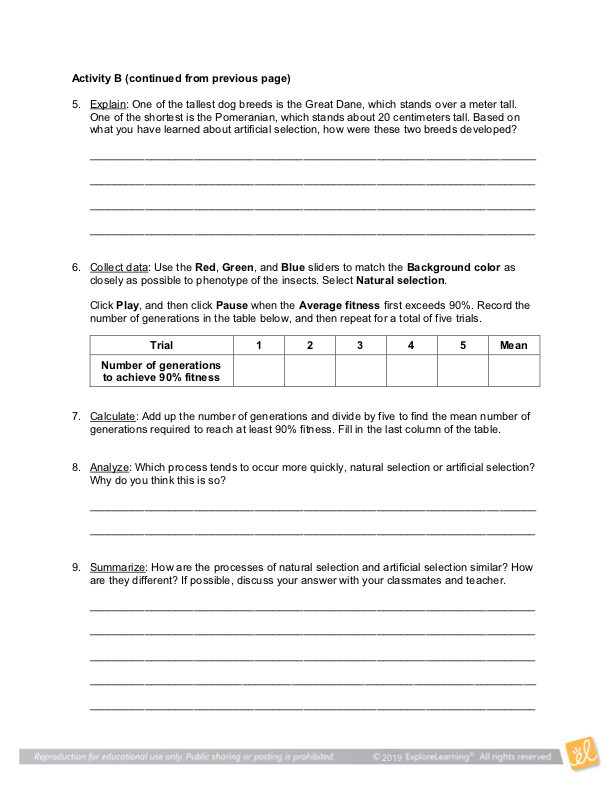
  • Use artificial selection to develop a new variety of insects.
  • Distinguish between the processes of natural and artificial selection.
  • Compare the rates at which natural and artificial selection occur.
  • Explore how the rate of mutations is related to the rate of adaptation to an environment.

VOCABULARY

artificial selection, breed, chromosome, evolution, fitness, genotype, mutation, natural selection,

ASSIGNMENT

Part 1 : Vocabulary and lesson

Search the vocabulary above and write it down in your notebook. Make sure you understand all the words.

Watch the videos below about natural and artificial selection.

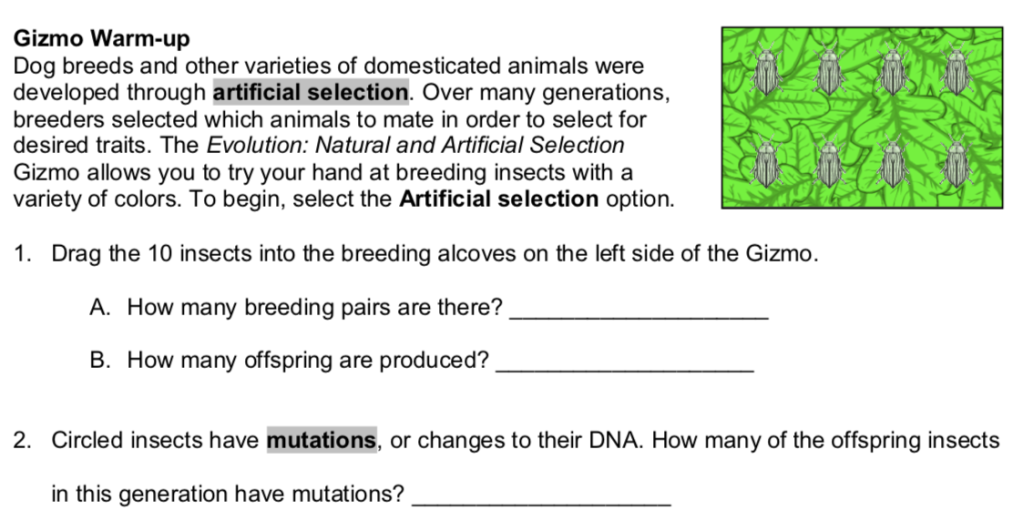
Part 2 : Gizmo warm-up

Visit explore learning. Complete the warm-up below.
Part 3 : Complete the activity below

7th Grade – 8th Grade

Hello scholars,

Here you can find some directives for the rest of the school year.

You will always find the unit overview when you view old posts on the main page. Thus, you can review everything we have done so far in science during the school year.

On each post, there is an assignment with the learning objectives. Visit explorelearning (gizmo) to complete the activity and khan academy to review the lesson. Let me know if you forgot your username.

My office hours are from Monday to Friday, 8am – 10am. Call me if you have any questions and want the correction.

Take care,

Mr Mockel

7th Grade 03/05/2020

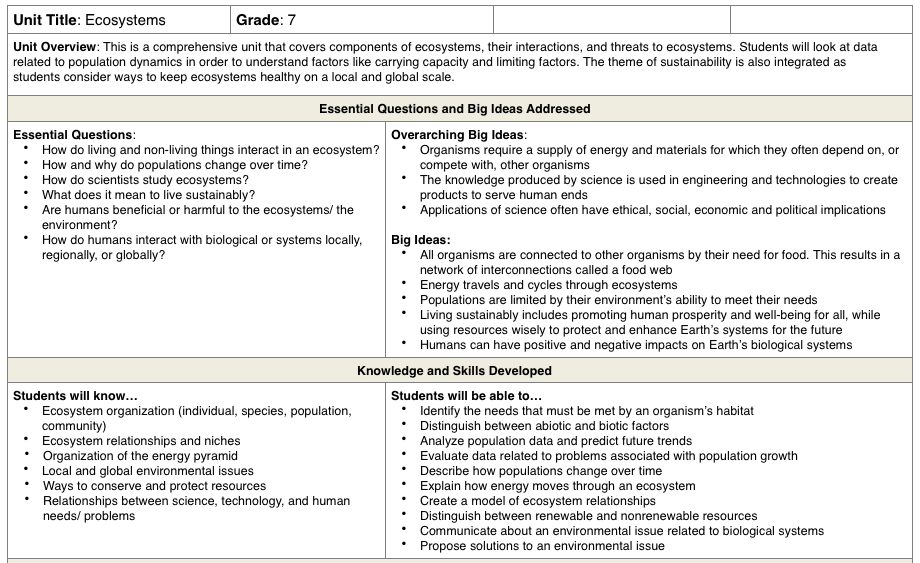
UNIT OVERVIEW

LEARNING OBJECTIVES

Students will…

  • Identify the producer in an ecosystem.
  • Classify consumers as herbivores or carnivores.
  • Investigate the interdependence of the organisms in an ecosystem.
  • Determine what each organism eats based on the results of experiments.
  • Explore the long-term effects of changes to the ecosystem.

VOCABULARY

carnivore, consumer, ecosystem, equilibrium, extinct, food chain, herbivore, organism, population, prairie, producer

ASSIGNMENT

Part 1 : Vocabulary

Search the vocabulary above and write it down in your notebook. Make sure you understand all the words.

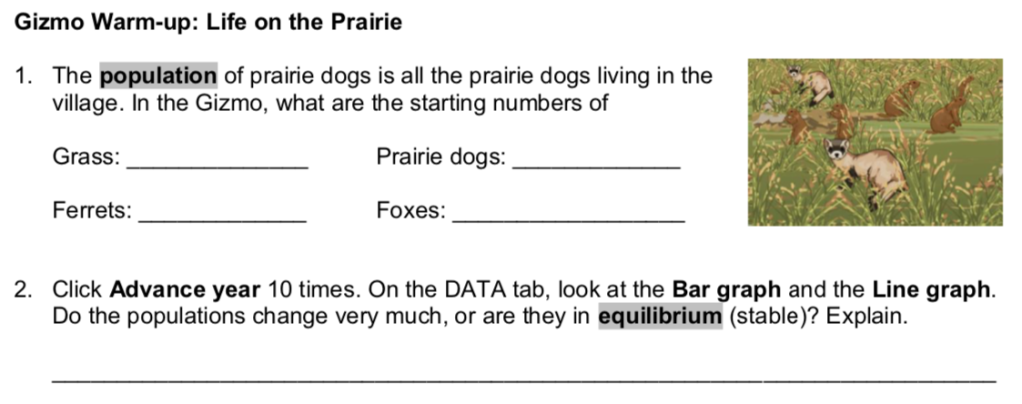
Part 2 : Gizmo warm-up

Visit explore learning. Complete the warm-up below.

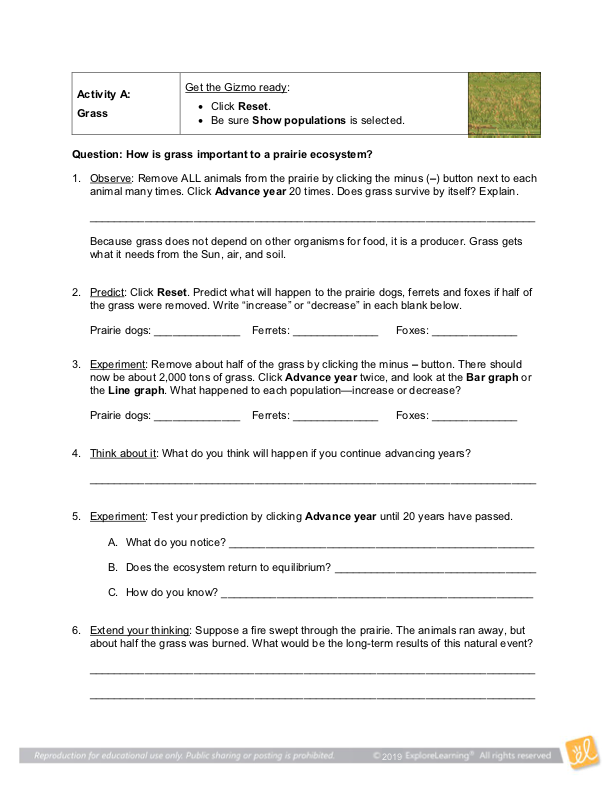
Part 3 : Activity A – Grass

Part 4 : Activity B – Making a food chain

8th Grade 03/05/2020

INTERVENTION

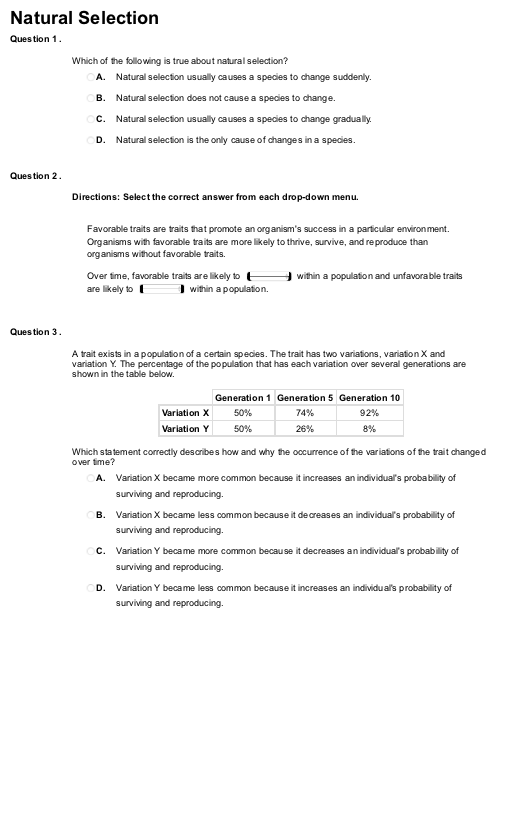
Complete the test below using the lesson.

Test

UNIT OVERVIEW

LEARNING OBJECTIVES

Students will…

  • Use artificial selection to develop a new variety of insects.
  • Distinguish between the processes of natural and artificial selection.
  • Compare the rates at which natural and artificial selection occur.
  • Explore how the rate of mutations is related to the rate of adaptation to an environment.

VOCABULARY

artificial selection, breed, chromosome, evolution, fitness, genotype, mutation, natural selection,

ASSIGNMENT

Part 1 : Vocabulary

Search the vocabulary above and write it down in your notebook. Make sure you understand all the words.

Part 2 : Gizmo warm-up

Visit explore learning. Complete the warm-up below.

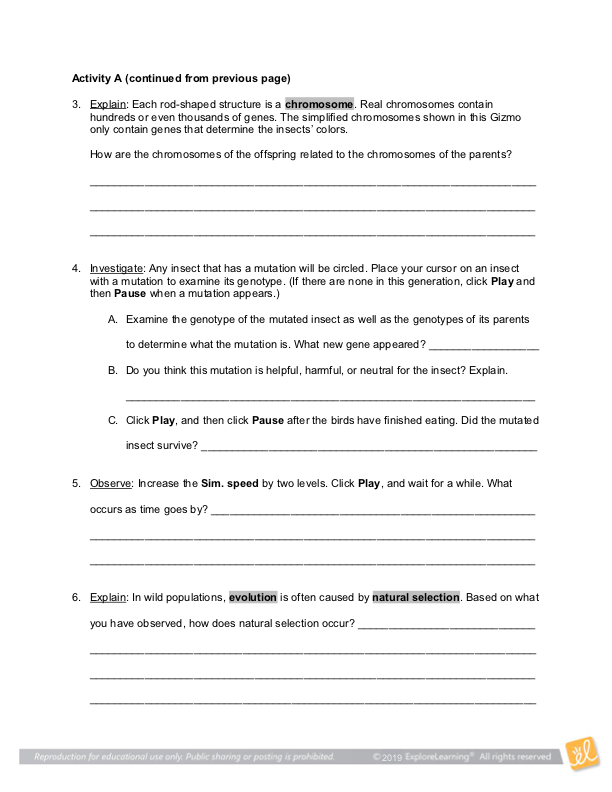
Part 3 : Complete the activity below
7th Grade 03/04/2020

UNIT OVERVIEW

LEARNING OBJECTIVES

Students will…

  • Identify the producer in an ecosystem.
  • Classify consumers as herbivores or carnivores.
  • Investigate the interdependence of the organisms in an ecosystem.
  • Determine what each organism eats based on the results of experiments.
  • Explore the long-term effects of changes to the ecosystem.

VOCABULARY

carnivore, consumer, ecosystem, equilibrium, extinct, food chain, herbivore, organism, population, prairie, producer

ASSIGNMENT

Part 1 : Vocabulary

Search the vocabulary above and write it down in your notebook. Make sure you understand all the words.

Part 2 : Gizmo warm-up

Visit explore learning. Complete the warm-up below.

Part 3 : Activity A – Grass

8th Grade 03/04/2020

INTERVENTION

Complete the test below using the lesson.

Test

UNIT OVERVIEW

LEARNING OBJECTIVES

Students will…

  • Use artificial selection to develop a new variety of insects.
  • Distinguish between the processes of natural and artificial selection.
  • Compare the rates at which natural and artificial selection occur.
  • Explore how the rate of mutations is related to the rate of adaptation to an environment.

VOCABULARY

artificial selection, breed, chromosome, evolution, fitness, genotype, mutation, natural selection,

ASSIGNMENT

Part 1 : Vocabulary

Search the vocabulary above and write it down in your notebook. Make sure you understand all the words.

Part 2 : Gizmo warm-up

Visit explore learning. Complete the warm-up below.

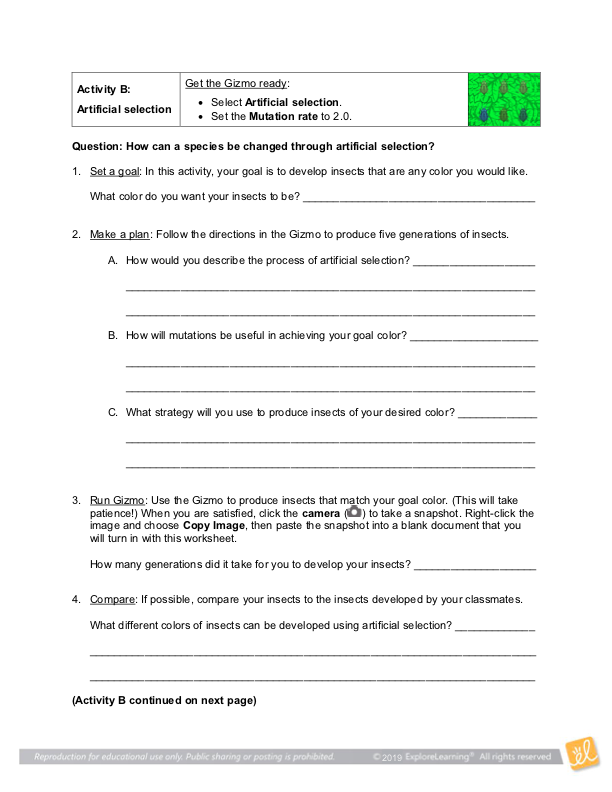
Part 3 : Complete the activity below
7th Grade 03/03/2020

UNIT OVERVIEW

LEARNING OBJECTIVES

Students will…

  • Identify the producer in an ecosystem.
  • Classify consumers as herbivores or carnivores.
  • Investigate the interdependence of the organisms in an ecosystem.
  • Determine what each organism eats based on the results of experiments.
  • Explore the long-term effects of changes to the ecosystem.

VOCABULARY

carnivore, consumer, ecosystem, equilibrium, extinct, food chain, herbivore, organism, population, prairie, producer

ASSIGNMENT

Part 1 : Vocabulary

Search the vocabulary above and write it down in your notebook. Make sure you understand all the words.

Part 2 : Gizmo warm-up

Visit explore learning. Complete the warm-up below.

Part 3 : Activity A – Grass

8th Grade 03/03/2020

INTERVENTION

Complete the test below using the lesson.

Test

UNIT OVERVIEW

LEARNING OBJECTIVES

Students will…

  • Use artificial selection to develop a new variety of insects.
  • Distinguish between the processes of natural and artificial selection.
  • Compare the rates at which natural and artificial selection occur.
  • Explore how the rate of mutations is related to the rate of adaptation to an environment.

VOCABULARY

artificial selection, breed, chromosome, evolution, fitness, genotype, mutation, natural selection,

ASSIGNMENT

Part 1 : Vocabulary

Search the vocabulary above and write it down in your notebook. Make sure you understand all the words.

Part 2 : Gizmo warm-up

Visit explore learning. Complete the warm-up below.

Concevoir un site comme celui-ci avec WordPress.com
Commencer